Showing posts with label curry. Show all posts

Wednesday, 4 September 2013

Okra curry (Bhinda nu shak)


Some of my older readers will remember this old fashioned recipe when our mums used to cook on Jikos/sagdis (A kind of a stove) using charcoal.  It took a bit longer to cook the food but the taste of the food was always amazing.  This was the time before you got processed foods and tinned foods. Nowadays most people use tinned tomatoes in their curries whilst our mums always used fresh tomatoes.  Anyway - I digress.

As some of you may know - I live out in the sticks where we don't get  Indian vegetables like okra (Bhinda).  The local supermarket sometimes sells okra but they are never fresh and tender.  My lovely sister in law had bought a big batch of fresh and tender okras for us.  Okra is one vegetable that you can't freeze well.  When chopped-it's quite sticky and freezing it makes it even stickier.  My blog has two recipes for Okra- stuffed okra and okra curry in a jiffy .  Both these are my husbands favourite recipes and I make them often.  However, I was longing to make this simple okra curry like the one my mum used to make and I decided to make that today.   My brother in law loves the curry made using my mum's recipe so Jijaji...this one is for you.

Ingredients for two servings

about 40 tender okras
4 tbs oil
1 tsp salt
1 tsp mustard seeds
1 tsp turmeric
1 tsp chilly powder (or less if you don't like hot food)
2 tsp ground dhana jeeru ( a mixture of coriander and cumin ground into a powder)
2-3 cloves of garlic mashed in a garlic press
2 teaspoons lemon juice (optional)

Method:

1.  Wash the okras in cold water and dry each and every okra individually using a kitchen towel or kitchen paper.


2.  Cut the top and tail of each okra and discard it.  Cut the rest of the okra into small round pieces. Tip: your hands and the knife will get sticky so keep kitchen paper handy to wipe your hands and the knife. Once you finish chopping all the okra - rub some salt in your hands and wash them to stop them feeling sticky. 


3.  Transfer the okra into a dry saucepan.  Add the salt, turmeric, chilly powder and dhana jeeru to the okra and mix well.


4,  Heat the oil in a small saucepan and add the mustard seeds to the oil.  Once the mustard seeds stop popping, add them on top of the chopped okras and stir.


5.  Cover the okra with a metal plate and add some water on top of the plate.   I used a steel plate to cover my saucepan and added some water on the plate.   This is the method my mum used to slow cook a lot of the curries she wanted left dry.  Allow the okra to cook on a low heat for 10-15 minutes and check and cook until the okra feels soft and cooked.  Do not allow any water formed on the bottom of the plate during condensation to fall in the curry.


6.  This way the okra curry cooks on a low heat without loosing any moisture.  Once cooked discard the plate covering the saucepan.


7.  Curry cooked on  slow heat over 20-30 minutes tasted a lot better than one cooked in 2-3 minutes zapped in the microwave.  The okras get cooked and reduced and makes just enough curry for two people.  You can add a dash of lemon juice to the curry if, like me,  you like a slight lemony taste.  Eat the curry hot with chappatis.


If you enjoy reading my blog, please click on Follow or become a fan of my page on Facebook or follow me on Twitter.

My blog is also available on Kindle.


Monday, 15 July 2013

Cannellini Beans Curry (also known as White Kidney Beans)


This recipe has been written especially for my son who phoned me up asking for the recipe for cooking these white beans as well as Kidney beans. It always gives me pleasure to know that he often refers to my blog.

Cannellini beans also known as white kidney beans are full of protein and taste really great.  They are available ready boiled in tins as well as dried beans which need to be soaked in cold water before cooking.  The best way to boil them is in a pressure cooker as it is quicker.  I have always been very fond of  any kind of beans such as the dark kidney beans, butter beans or black eyed beans and love them best cooked as a curry with a slightly sweet and sour taste.


Ingredients (serves 2):

2 cups of boiled cannellini beans.. If using dry Cannellini  beans, you need to soak them overnight before boiling them until soft.
2 cups of crushed tomatoes ( you can used pasata or fresh tomatoes )
2 tbls cooking oil (I used sunflower oil)
1 tsp dry cumin, 2 small pieces of cinammon, 3 small cloves
1 tsp salt
1 tsp turmeric
1 tsp chilly powder
1 tsp crushed garlic
1  tbls lemon juice
1 tbls jaggery or brown sugar
1 small bunch of coriander and some curry leaves.
2 fresh green chillies

Method:

1. Heat  2 tablespoons cooking oil  and add the cumin seeds, cloves and cinammon and allow the cumin to cook until it looks dark.

2.  Add the garlic, curry leaves and tomatoes to the mixture and stir.

3.  Add all the spices, lemon and jaggery to the tomato mixture.
4. Cook all the ingredients until the tomatoes go soft and homogenous.


5.. Add the boiled cannelloni beans to the mixture and cook for a further 10 minutes on a medium heat. (If for some reason - your gravy looks too runny - you can add one teaspoon of corn flour to the mixture and that should thicken the gravy)


6.  Serve the curry hot with rice and salad.

 
 If you enjoy reading my blog, please click on Follow or become a fan of my page on Facebook or follow me on Twitter.

My blog is also available on Kindle.


Tuesday, 7 August 2012

Vaal Bean Curry (Field bean Curry)


I have been trying to post this recipe for weeks and have been hesitating as I am not sure what the biological name for this bean is.  I did some research on Google and found that it is the field bean but then some people were calling it the hyacinth bean as well. 

It's sold in Indian shops as val, vaal or surti val.  Val curry is really popular in all Gujarati homes and served as a dish at most Gujarati weddings too.  

Val grows like any bean as a creeper.   It's green beans are called valor and they look like this:


Valor curry is really tasty too.

It's seeds (you can see them below) can be eaten green or are  dried and become the val bean.


And this is what they look like dried:


Now for the recipe:

Ingredients for 4 servings:

2 cups of Val I cup of Passata ( you can used fresh tomatoes too or tinned tomatoes too) Passata is made from ripe tomatoes that have been puried and sieved to remove the skin and seeds. It's sauce is a lot thicker and helps make the gravy in curry look richer and thicker. Passata is sold in bottles or cartons in most supermarkets and comes in various flavours such as garlic, basil etc. 
 tablespoons of oil (I used sunflower oil) 
2 teaspoons of tempering mix (it’s a mixture of cumin seeds, mustard seeds, 
2 dried red chillies and some ajwein seeds) 
1 teaspoon lo salt (It's healthier than normal salt) 
1 teaspoon turmeric 
1 teaspoon chilly powder 
1 teaspoon crushed garlic 
1 tablespoons lemon juice 
1 tablespoon sugar substitute like Splenda ( or you can used jaggery or brown sugar 
1 small bunch of coriander and some curry leaves. 2 fresh green chillies sliced into small pieces

Method:

1.  Wash and soak the val beans overnight (at least 6-7 hours).

2.  Once soaked, boil them in lots of water until soft.  Val beans do take a lot of time to cook so using a pressure cooker would make this a lot easier. My tip is to soak a large amount of val beans and cook them all and freeze them to use as required. 


3. Once cooked, strain the water and prepare the tempering.

4.  Add all the spices -salt, turmeric,chilly powder, crushed garlic, lemon juice, green chillies, curry leaves, coriander and sugar substitute  to the tomato mixture and mix it all together. If using fresh tomatoes, I suggest that you boil them in hot water to soften them first.

5. Heat the 2 tablespoons cooking oil  and add the tempering mix and allow them to cook until the cumin looks dark brown.  I am told that adding ajwein to the tempering helps to give val nice taste and also helps with digestion.

6.  Add the tomato and spices mixture to this hot oil and cook until the tomatoes go soft and homogenous.

7.  Add the boiled val  to the tomato mixture and allow to cook for 5-7 minutes.  


8. The sauce should all be nicely soaked up by the val. 

Tip: If the sauce looks too runny - you can 1 or 2 teaspoons of chick pea flour or corn flour to thicken it. If you like their gravy to be runny, you can add half a cup of water to the mixture.


9. Garnish with coriander and serve the val curry with rice and chappatis


If you enjoy reading my blog, please click on Follow or become a fan on my facebook page or follow me on Twitter.

My blog is also available on Kindle   


Sunday, 27 May 2012

Valor, methi (fenugreek) & aubergines with muthias (dumplings) curry


Every family has some favourite dishes they make regularly with some variations.  This is one dish I make at least once a month but with variation of vegetables depending on what is available seasonally.   A recipe for a similar dish with potatoes and without the aubergines is here.  

Ingredients:

2 cups of valor prepared into small pieces. See here how to prepare valor.
1 medium sized aubergine cut into cubes.
half a cup of fresh chopped methi (fenugreek)
10 muthias (you can use more if you like) Recipe for muthias is here
one cup of passata ( you can use canned tomatoes if you wish)
3-4 cloves garlic which should be really crushed finely
2 tablespoons cooking oil
1 teaspoon a mixture of cumin and mustard seeds
salt to taste
chilly powder to taste
1 teaspoon turmeric powder
1 tablespoon lemon juice.

Method:

1. Heat the 2 tablespoons of oil in a saucepan with a lid. 

2. Add the mustard and cumin seeds to the hot oil and cover until the popping stops.

3. Lower the heat and add the aubergines, valor and methi. 

4. Stir well and add the garlic, salt, chilly powder and turmeric powder.

5. Add half a cup of water and stir. 

6.  Transfer the dish to the microwave and cook for 5 minutes. 


7. Check that the valor has softened. If not - allow five more minutes. The aubergines don't take too long to cook.

8. Add the muthias to the curry and allow it to cook for five minutes. The muthias will start to absorb any moisture in the curry.


9. Add the passata or tomatoes and lemon and allow the curry to cook in the microwave  for 2-3  minutes until it gets to the consistancy you like. I am not keen on too much gravy in my curries.

10. Try and be gentle when stirring your curry so you can see all the vegetables when it is cooked.

11. Serve with rice or khichedi and any of the Indian breads such as chappatis or porathas.


If you enjoy reading my blog, please click on Follow or become a fan on my facebook page or follow me on Twitter

My blog is also available on Kindle   

Friday, 2 March 2012

Black eyed Beans Curry (Chora nu shak)


Black eyed  beans  are full of protein, are easy to cook and taste really great.  They are available ready boiled in cans or as dried beans which need to be soaked for at least 2 hours in cold water before cooking.  The best way to boil them is in a pressure cooker as it is quicker.  I tend to soak a huge batch overnight  and cook them all in a pressure cooker with plenty of water.  Add a couple of drops of oil in the pressure cooking before shutting the lid and this helps to cook the beans and stops the pressure cooker from over flowing. Drain off all the water once the beans are cooked and allow the beans to cool.  Freeze the extra beans in zip lock bags to use when needed. 


I have always been very fond of black eyed  beans and love them best cooked as a curry with a slightly sweet and sour taste.  This is a dish I make at least once a month so I was surprised that I had not included this recipe in my blog under the Mirage series. (Mirage series contains recipes which are a favourite with my son and his young friends).  There are lots of different ways of making this curry but I feel that my style is quick and easy to make. 

Ingredients (serves 2):

2 cups of boiled black eyed  beans. If using dry black eyed beans  remember you need to soak them overnight and then boil them until soft preferably in a pressure cooker.
I cup of crushed tomatoes ( you can used fresh tomatoes too or  Passata too. Passata is made from ripe tomatoes that have been puried and sieved to remove the skin and seeds.  It's sauce is a lot thicker and helps make the gravy in curry look richer and thicker. Passata is sold in bottles or cartons in most supermarkets and comes in various flavours such as garlic, basil etc.
2 tablespoons of oil (I used sunflower oil)
2 teaspoons of tempering mix (it’s a mixture of cumin seeds, whole peppercorns , cloves, cinnamon, whole coriander )
1 teaspoon salt
1 teaspoon turmeric
1 teaspoon chilly powder
1 teaspoon crushed garlic
1  tablespoons lemon juice
1 tablespoons jaggery or brown sugar (optional)
1 small bunch of coriander and some curry leaves.
2 fresh green chillies sliced into 4

Method:

1.  Add all the spices -salt, turmeric,chilly powder, crushed garlic, lemon juice, green chillies, curry leaves, coriander and jaggery to the tomato mixture and mix it all together. If using fresh tomatoes, I suggest that you boil them in hot water to soften them first .


2.  Add the 2 tablespoons cooking oil to this, add the tempering mix and allow them to cook until the cumin looks dark brown.


3.  Add the tomato and spices mixture to this hot oil and cook until the tomatoes go soft and homogenous.  

4.  Add the boiled black eyed beans to the tomato mixture and allow to cook for 5-7 minutes.   
 

5.  The sauce should all be nicely soaked up by the black eyed beans.
Tip:Some people like their gravy to be runny in which case you can add half a cup of water to the mixture.


6.  Serve the curry with rice and chappatis.


If you enjoy reading my blog, please click on Follow or become a fan on my facebook page or follow me on Twitter

My blog is also available on Kindle   

Monday, 13 June 2011

Pigeon Peas/ Gunga Peas or Lilva Tuvar Curry


Pigeon Peas is also called Gunga peas or Lilva tuvar gungo and come in various forms. When they are fresh and green, they can be peeled like fresh peas. You can get fresh, frozen or tinned varieties of pigeon peas in most Asian supermarkets.

Ingredients (serves 2):

Cooking time : 20 minutes

2 cups of boiled pigeon peas
½ a can of crushed tomatoes ( you can used fresh tomatoes or passata too)
2 tablespoon cooking oil (I used sunflower oil)
1 teaspoon dry cumin seeds,
2 small pieces of cinnamon,
3 cloves
1 teaspoon salt
1 teaspoon turmeric
1 teaspoon chilly powder
1 teaspoon crushed garlic
½ teaspoon of garam masala
1 tablespoons lemon juice
1 tablespoons jaggery or brown sugar (optional)
1 small bunch of coriander and some curry leaves.
1 tablespoon dessicated coconut
2 fresh green chillies

Method:


1 Heat the 2 tablespoons cooking oil and add the cumin seeds, cloves and cinnamon. The cloves will pop and the cumin needs to cook until it goes dark.

3. Add the garlic, curry leaves and tomatoes to the mixture and stir.

4. Add all the spices, lemon and jaggery to the tomato mixture.

5. Cook all the ingredients until the tomatoes go soft and homogenous.

6. Add the boiled pigeon peas to the mixture and cook for a further 10 minutes on a medium heat.


7. Add the garam masala and remove the pigeon peas curry to a serving dish and sprinkle it with some chopped green chillies, desiccated coconut and coriander.


8. This curry should be served hot with rice or any of the Indian breads.

I served this with coriander and green chilly flavoured parathas (recipe to follow)..


If you enjoy reading my blog, please click on Follow or become a fan of my page on Facebook or follow me on Twitter. My blog  is also available on Kindle.  

Thursday, 9 June 2011

Potato and mixed vegetable curry


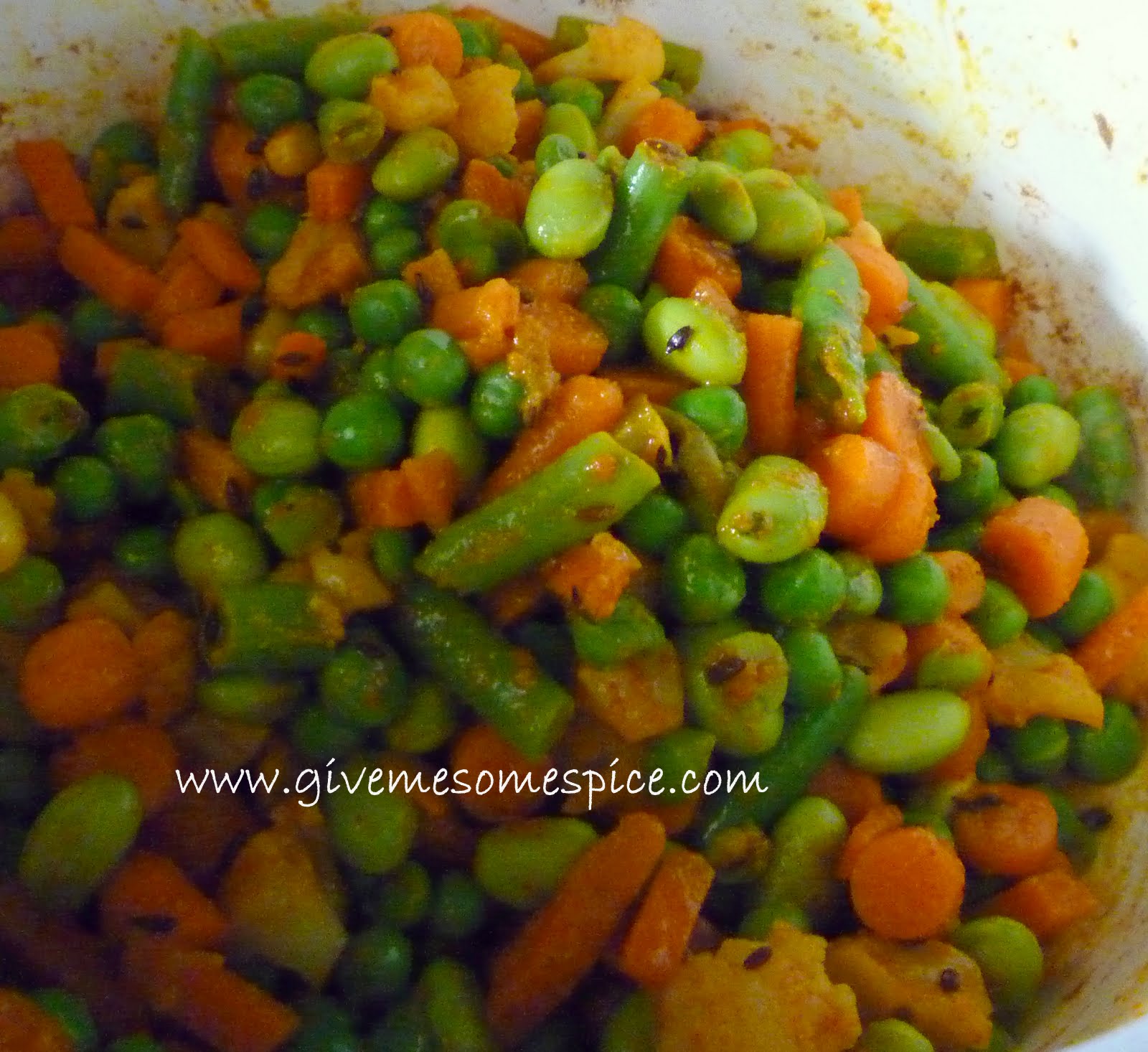
The following  recipe for Potato and mixed vegetable has  been published on the City Connect website at http://www.city-connect.org/2011/06/07/potato-mixed-vegetable-curry.  Please take a look at the website for my recipe and interesting other information. I hope to be a regular contributor to this website.

The main reason for choosing such an easy and simple recipe for the City Connections Website was to convince  people who are not familiar with Indian cooking  that  they can make nice curries at home, using ingredients available in most supermarkets.  This potato and mixed vegetable curry is perfect dish to serve with rice and naan bread. The mixed vegetables make it a healthy curries choice for lunch or dinner.

Preparation time: 10 minutes
Cooking time 15 minutes


Ingredients for 4 servings

1 teaspoon cumin seeds or mustard seeds
½ teaspoon of salt
½ teaspoon of chilly powder
½ teaspoon of turmeric
½ teaspoon of a mixture of cumin and coriander powder
2-3 cloves of crushed garlic
2 tablespoons of sunflower cooking oil
1 tablespoon of lemon juice (optional)
1 tablespoon of brown sugar (optional)
2 medium sized boiled potatoes
3 cups of any frozen mixed vegetables
1 cup of passata ( or crushed tinned tomatoes)
Small bunch of coriander (for garnishing)
2-3 green chillies (optional)


Method:

1. Soak your frozen vegetables in hot water and once they soften, chop them into smaller pieces.


2. Heat the oil in saucepan and add the cumin and mustard seeds to the oil.

3. The mustard will pop when the oil gets hot and the cumin will start to get darker. This means that the oil is ready.

4. Rinse the frozen vegetables and add them to the heated oil.

5. Add the salt, turmeric, chilly powder, crushed garlic and cumin coriander to the mixture and stir well so that all the vegetables get coated with the spices.


6. Cook this for a minute and add the passata to this mixture with one cup of hot water.

7. Allow this to simmer gently for 6-7 minutes.


8. Chop the boiled potato into small cubes and add it to the mixed vegetables.


9. Stir well and allow to cook for 5 minutes.

10. Add the lemon juice and brown sugar if you like a sweet and sour taste.

11. Transfer to a serving dish and garnish with green chillies or coriander


If you enjoy reading my blog, please click on Follow or become a fan of my page on Facebook or follow me on Twitter.

 My blog  is also available on Kindle.