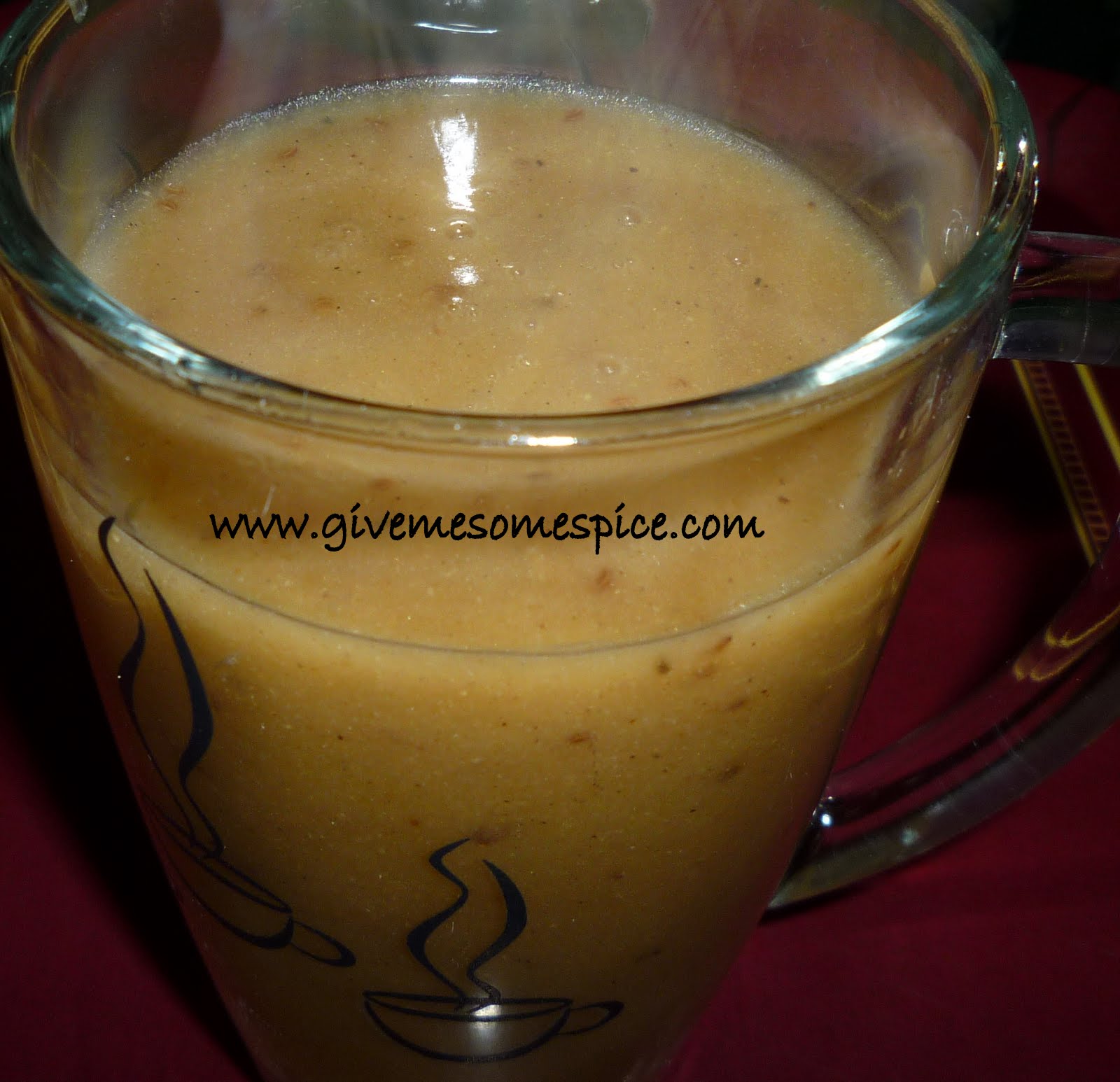
Most Indian dishes are accompanied by chutneys and pickles of some sort. Some are made fresh on the day and some last longer. This Mango Chundo is a popular preserve from the Gujarat side of India. It has a sweet and sour taste and if made correctly, can last a long time. I tend to make it and keep in small jars rather than putting it all in one big jar. By using a bottle at a time, the preserve lasts longer. This chundo is best made with raw mangoes. I bought some at the Asian stores and they are called Rajapuri mangoes. These mangoes have a small stone and lots of pulp so although they may be expensive, they are worth it as you get a lot of mango pulp and mangoes have the taste and aroma you can only dream of.
Ingredients for about 2 Jam jars worth of Chundo (approximately a 1,000 grams)
2 large Rajapuri or similar mangoes (the grated weight of the 2 mangoes was 775 grams)
700 grams sugar (you could use another 50 grams less too!)
1 teaspoon salt
1 teaspoon turmeric
1-2 teaspoons chilly powder
1 teaspoon cumin seeds
5-8 cloves
5-8 cinnamon sticks
Teaspoon of cardamom seeds
5-8 whole pepper cones
1 tablespoon sunflower oil
Method
1. Peel the mangoes and wash them whole and dry them with a kitchen paper.

2. Grate the mangoes and weigh them. (This is essential as you need to use sugar slightly less than the weight of the mangoes)

3. Add the salt and turmeric to the grated mango and mix well.

4. Keep this covered for 30 minutes.
5. The salt will make the mango mixture runny.
6. Now add the sugar. The amount of sugar depends on the weight of the grated mango. Most recipes ask for one and a half times the weight of the mango. My advice is to use at least 100 grams less than the weight of the mangoes. This is for 2 reasons – one is for health reasons. Too much sugar can’t be good for anyone!! Another is that the pickle needs to be sweet and sour and for that reason – go easy on the sugar.

7. When you mix the sugar, the mixture will become even runnier.
8. Transfer this to a large microwave dish with a lid. The timings for cooking in the microwave will depend on the weight of the mango and sugar mixture plus the size and speed of your microwave.

9. Microwave this mixture on a high for 10 minutes, remove and stir the mixture. The mixture will still look quite runny.

10. Again microwave on high for 10 minutes, remove and stir the mixture.

11. By now, you’ll notice that the mixture is starting to look darker and thicker.


12. Keep repeating the microwave cooking and stirring for 5 minutes at a time.


13. My chundo took about 35 - 38 minutes to cook. When only a small amount of moisture remains, stir and leave the mixture to cool. You will notice that it continues to thicken and the consistency of the chundo will look similar to marmalade.


14. Whilst it’s cooling, add the chilly powder. The amount of chilly powder shouldn’t over power the sweet and sour taste so add one teaspoon and then the second one if you feel it needs an extra kick! .
Now prepare the tempering with the spices:

15. In another microwave dish, add the spices -cinnamon, cardamom, whole peppercones, cloves and cumin. Warm these spices for a minute. This will release the oils in the spices and produce a lovely aroma.
16. Add 1 tablespoon of oil to the spices and heat it in the microwave for 2 minutes.
17. Now add this spice mixture to the mango chundo and stir.


18. Once this mixture cools, transfer the chundo to clean sterilized bottles and enjoy with any Indian dish.

Like all my recipes, I take great pride in givng you as many details as I can so that you can easily follow the instructions and also have the confidence that the recipe will work. I hope that when you follow any of my recipes, you will let me have your opinion on how the dish turned out!
If you enjoy reading my blog, please click on Follow or become a fan of my page on Facebook or follow me on Twitter.
My blog is also available on Kindle.